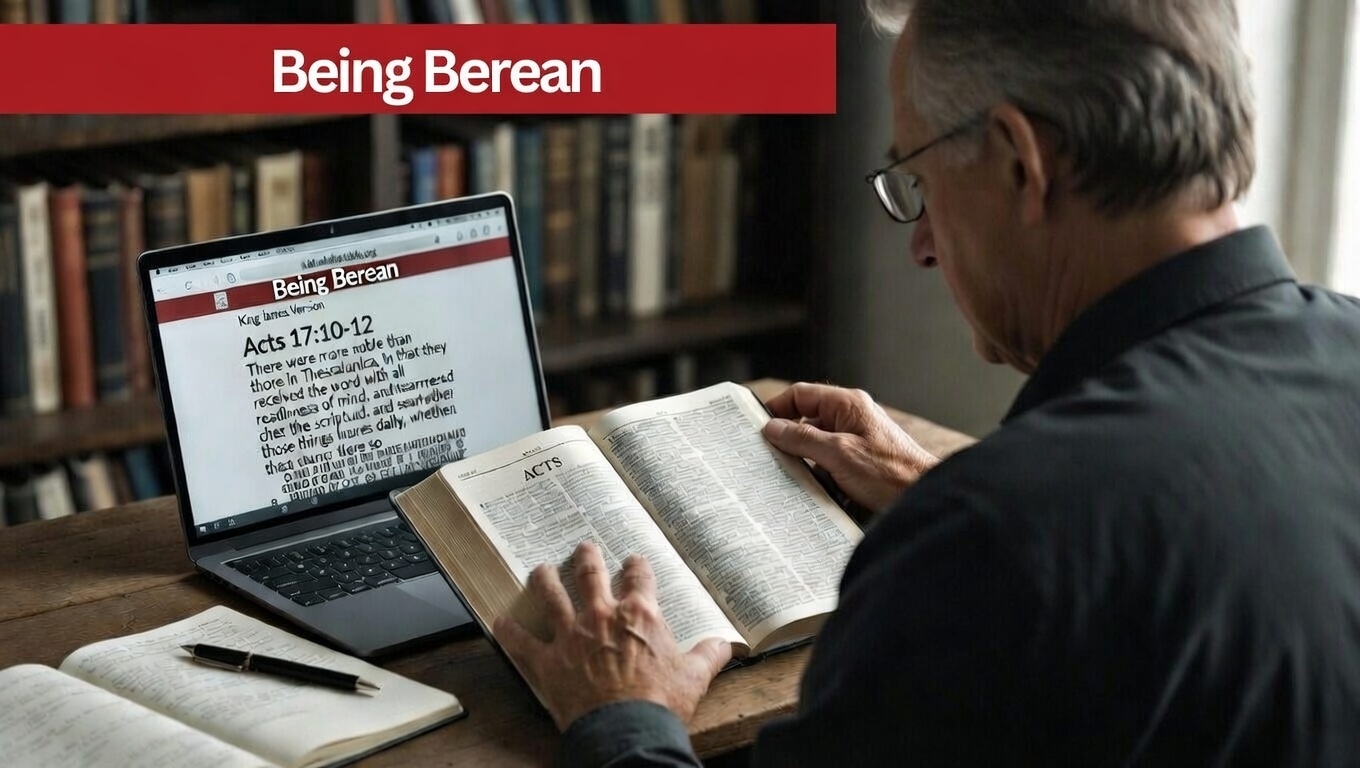
Being Berean – An AI GPT Short Guide
> **Acts 17:11 (NIV)**
> “Now the believers in Thessalonica had a better reputation than those in
Berea, and they received the word with all eagerness, examining the
Scriptures daily to see if this was true.”
1. Who Were the Bereans?
Historical context:** A city in Bithynia (north‑west Anatolia). Not as
well known as Athens, but it earned a reputation for **intellectual
rigor**.
- **Paul’s visit:** In Acts, the Apostle Paul and Silas preach at a
synagogue. Instead of simply “believing,” the Bereans *“examined the
Scriptures daily”* to confirm the truth of Paul’s testimony.
2. Core Characteristics of a Berean
| Trait | Biblical Insight | Practical Take‑away |
|-------|------------------|---------------------|
| **Eagerness** | They were “eager to receive” the message. |
**Open‑mind**: Approach new ideas with curiosity, not defensiveness. |
| **Diligence** | “Examining the Scriptures daily.” | **Consistency**:
Make regular study or reflection a habit. |
| **Critical Thinking** | Cross‑checking Paul’s words against Scripture. |
**Inquiry**: Question, compare, and test beliefs—never accept anything on
faith alone. |
| **Humility** | Their noble character meant they were **not** dogmatic. |
**Learn‑from‑others**: Seek diverse perspectives, admit what you don’t
know. |
| **Community** | They were a group, not isolated individuals. | **Shared
learning**: Study in a group, discuss, debate respectfully. |
3. Why It Matters Today
- **Intellectual integrity:** In an age of information overload, the
Berean way helps distinguish truth from noise.
- **Spiritual growth:** It fosters a deeper, more personal faith that is
grounded in Scripture, not merely tradition or opinion.
- **Interpersonal relationships:** When we examine, we listen; we do not
merely argue.
4. How to Become Berean
| Step | How to Implement |
|------|------------------|
| **1. Get the right resources** | Choose a reliable Bible, a commentary
or study guide, and a journal. |
| **2. Create a routine** | Dedicate 20–30 min daily: read a passage,
reflect, jot questions. |
| **3. Ask questions** | “What does this say? How does it compare to other
passages? What does it mean for me?” |
| **4. Cross‑check** | Use cross‑referencing tools or apps to see how the
verse is tied elsewhere. |
| **5. Discuss** | Join a small‑group study or online forum; share
insights and listen. |
| **6. Pray** | Ask for wisdom, humility, and the ability to apply what
you learn. |
| **7. Apply** | Translate insight into action—how does this scripture
shape your choices? |
Quick Study Prompt
1. **Read**: Pick a passage (e.g., a chapter in a book of the Bible).
2. **Note**: Write 3–5 questions you have.
3. **Compare**: Look up cross‑references or a commentary.
4. **Reflect**: Write a brief summary of what you’ve learned.
5. **Apply**: Identify one practical step to take in the coming week.
5. A Short Meditation
“May we, like the Bereans, be eager to receive truth, diligent in our
study, humble in our approach, and always ready to test our convictions
against the Word of God.”*
6. Closing Thought
Being Berean isn’t a one‑off act; it’s a lifelong posture of **open,
discerning, and humble inquiry**. In a world that often rewards certainty,
the Berean reminds us that true wisdom comes from **examining,
questioning, and aligning** what we hear with what the Scriptures say.
*(Feel free to share this outline in a study group or use it as a personal
guide. If you’d like a deeper dive into a specific passage or practical
tools, let me know!)*