Being Berean Home

Ben Shapiro and John MacAuthur Video
- Details
- Written by: danwillie
- Category: Youtube Video
- Hits: 6
Ben Shapiro and John MacAuthur YouTube Video. Click the link below to see it.
This was an excellent interview between a Jew and a Christian. I Pray for Ben often and Thankful for all that John did while here on earth.John is in heaven with the Lord now. This is Ben's transcript.
Chapter 1: Introduction
Chapter 2: COVID legal battle
Chapter 3: Decline of religion
Chapter 4: Role of the church
Chapter 5: Importance of leadership
Chapter 6: Teaching faith
Chapter 7: The real Jesus
Chapter 8: Faith vs acts
Chapter 9: War on children
Chapter 10: Wokeness and rebellion
Chapter 11: Community membership
Chapter 12: Identity and technology
Chapter 13: Politicization of faith
Chapter 14: Israel and judgment
Chapter 15: Theological clarity
Chapter 16: Conclusion
- Danwillie Blogger and Believer in Christ.: At 75, I have been blogging since Al Gore invented internet. When I was 9, a lady, Mrs Slayter lead me to Christ. At that time I had little knowledge other than I was a sinner and Christ provided my a path to heaven. Every day, I thank God for Mrs Slayter.

Romans 8 KJV
- Details
- Written by: danwillie
- Category: Romans 8 Greatest Chapter KJV
- Hits: 70
Romans 8 Line Form
"1 There is therefore now no condemnation to them which are in Christ Jesus, who walk not after the flesh, but after the Spirit.
2 For the law of the Spirit of life in Christ Jesus hath made me free from the law of sin and death.
3 For what the law could not do, in that it was weak through the flesh, God sending his own Son in the likeness of sinful flesh, and for sin, condemned sin in the flesh:
4 That the righteousness of the law might be fulfilled in us, who walk not after the flesh, but after the Spirit.
5 For they that are after the flesh do mind the things of the flesh; but they that are after the Spirit the things of the Spirit.
6 For to be carnally minded is death; but to be spiritually minded is life and peace.
7 Because the carnal mind is enmity against God: for it is not subject to the law of God, neither indeed can be.
8 So then they that are in the flesh cannot please God.
9 But ye are not in the flesh, but in the Spirit, if so be that the Spirit of God dwell in you. Now if any man have not the Spirit of Christ, he is none of his.
10 And if Christ be in you, the body is dead because of sin; but the Spirit is life because of righteousness.
11 But if the Spirit of him that raised up Jesus from the dead dwell in you, he that raised up Christ from the dead shall also quicken your mortal bodies by his Spirit that dwelleth in you.
12 Therefore, brethren, we are debtors, not to the flesh, to live after the flesh.
13 For if ye live after the flesh, ye shall die: but if ye through the Spirit do mortify the deeds of the body, ye shall live.
14 For as many as are led by the Spirit of God, they are the sons of God.
15 For ye have not received the spirit of bondage again to fear; but ye have received the Spirit of adoption, whereby we cry, Abba, Father.
16 The Spirit itself beareth witness with our spirit, that we are the children of God:
17 And if children, then heirs; heirs of God, and joint-heirs with Christ; if so be that we suffer with him, that we may be also glorified together.
18 For I reckon that the sufferings of this present time are not worthy to be compared with the glory which shall be revealed in us.
19 For the earnest expectation of the creature waiteth for the manifestation of the sons of God.
20 For the creature was made subject to vanity, not willingly, but by reason of him who hath subjected the same in hope,
21 Because the creature itself also shall be delivered from the bondage of corruption into the glorious liberty of the children of God.
22 For we know that the whole creation groaneth and travaileth in pain together until now.
23 And not only they, but ourselves also, which have the firstfruits of the Spirit, even we ourselves groan within ourselves, waiting for the adoption, to wit, the redemption of our body.
24 For we are saved by hope: but hope that is seen is not hope: for what a man seeth, why doth he yet hope for?
25 But if we hope for that we see not, then do we with patience wait for it.
26 Likewise the Spirit also helpeth our infirmities: for we know not what we should pray for as we ought: but the Spirit itself maketh intercession for us with groanings which cannot be uttered.
27 And he that searcheth the hearts knoweth what is the mind of the Spirit, because he maketh intercession for the saints according to the will of God.
28 And we know that all things work together for good to them that love God, to them who are the called according to his purpose.
29 For whom he did foreknow, he also did predestinate to be conformed to the image of his Son, that he might be the firstborn among many brethren.
30 Moreover whom he did predestinate, them he also called: and whom he called, them he also justified: and whom he justified, them he also glorified.
31 What shall we then say to these things? If God be for us, who can be against us?
32 He that spared not his own Son, but delivered him up for us all, how shall he not with him also freely give us all things?
33 Who shall lay any thing to the charge of God’s elect? It is God that justifieth.
34 Who is he that condemneth? It is Christ that died, yea rather, that is risen again, who is even at the right hand of God, who also maketh intercession for us.
35 Who shall separate us from the love of Christ? shall tribulation, or distress, or persecution, or famine, or nakedness, or peril, or sword?
36 As it is written, For thy sake we are killed all the day long; we are accounted as sheep for the slaughter.
37 Nay, in all these things we are more than conquerors through him that loved us.
38 For I am persuaded, that neither death, nor life, nor angels, nor principalities, nor powers, nor things present, nor things to come,
39 Nor height, nor depth, nor any other creature, shall be able to separate us from the love of God, which is in Christ Jesus our Lord.
Paragraph Form Romans 8
[1] [There is] therefore now no condemnation to them which are in Christ Jesus, who walk not after the flesh, but after the Spirit. [2] For the law of the Spirit of life in Christ Jesus hath made me free from the law of sin and death. [3] For what the law could not do, in that it was weak through the flesh, God sending his own Son in the likeness of sinful flesh, and for sin, condemned sin in the flesh: [4] That the righteousness of the law might be fulfilled in us, who walk not after the flesh, but after the Spirit. [5] For they that are after the flesh do mind the things of the flesh; but they that are after the Spirit the things of the Spirit. [6] For to be carnally minded [is] death; but to be spiritually minded [is] life and peace. [7] Because the carnal mind [is] enmity against God: for it is not subject to the law of God, neither indeed can be. [8] So then they that are in the flesh cannot please God. [9] But ye are not in the flesh, but in the Spirit, if so be that the Spirit of God dwell in you. Now if any man have not the Spirit of Christ, he is none of his. [10] And if Christ [be] in you, the body [is] dead because of sin; but the Spirit [is] life because of righteousness. [11] But if the Spirit of him that raised up Jesus from the dead dwell in you, he that raised up Christ from the dead shall also quicken your mortal bodies by his Spirit that dwelleth in you. [12] Therefore, brethren, we are debtors, not to the flesh, to live after the flesh. [13] For if ye live after the flesh, ye shall die: but if ye through the Spirit do mortify the deeds of the body, ye shall live. [14] For as many as are led by the Spirit of God, they are the sons of God. [15] For ye have not received the spirit of bondage again to fear; but ye have received the Spirit of adoption, whereby we cry, Abba, Father. [16] The Spirit itself beareth witness with our spirit, that we are the children of God: [17] And if children, then heirs; heirs of God, and joint-heirs with Christ; if so be that we suffer with [him], that we may be also glorified together. [18] For I reckon that the sufferings of this present time [are] not worthy [to be compared] with the glory which shall be revealed in us. [19] For the earnest expectation of the creature waiteth for the manifestation of the sons of God. [20] For the creature was made subject to vanity, not willingly, but by reason of him who hath subjected [the same] in hope, [21] Because the creature itself also shall be delivered from the bondage of corruption into the glorious liberty of the children of God. [22] For we know that the whole creation groaneth and travaileth in pain together until now. [23] And not only [they], but ourselves also, which have the firstfruits of the Spirit, even we ourselves groan within ourselves, waiting for the adoption, [to wit], the redemption of our body. [24] For we are saved by hope: but hope that is seen is not hope: for what a man seeth, why doth he yet hope for? [25] But if we hope for that we see not, [then] do we with patience wait for [it]. [26] Likewise the Spirit also helpeth our infirmities: for we know not what we should pray for as we ought: but the Spirit itself maketh intercession for us with groanings which cannot be uttered. [27] And he that searcheth the hearts knoweth what [is] the mind of the Spirit, because he maketh intercession for the saints according to [the will of] God. [28] And we know that all things work together for good to them that love God, to them who are the called according to [his] purpose. [29] For whom he did foreknow, he also did predestinate [to be] conformed to the image of his Son, that he might be the firstborn among many brethren. [30] Moreover whom he did predestinate, them he also called: and whom he called, them he also justified: and whom he justified, them he also glorified. [31] What shall we then say to these things? If God [be] for us, who [can be] against us? [32] He that spared not his own Son, but delivered him up for us all, how shall he not with him also freely give us all things? [33] Who shall lay any thing to the charge of God's elect? [It is] God that justifieth. [34] Who [is] he that condemneth? [It is] Christ that died, yea rather, that is risen again, who is even at the right hand of God, who also maketh intercession for us. [35] Who shall separate us from the love of Christ? [shall] tribulation, or distress, or persecution, or famine, or nakedness, or peril, or sword? [36] As it is written, For thy sake we are killed all the day long; we are accounted as sheep for the slaughter. [37] Nay, in all these things we are more than conquerors through him that loved us. [38] For I am persuaded, that neither death, nor life, nor angels, nor principalities, nor powers, nor things present, nor things to come, [39] Nor height, nor depth, nor any other creature, shall be able to separate us from the love of God, which is in Christ Jesus our Lord. [Rom 8:1-39 KJV]
- Danwillie Blogger and Believer in Christ.: At 75, I have been blogging since Al Gore invented internet. When I was 9, a lady, Mrs Slayter lead me to Christ. At that time I had little knowledge other than I was a sinner and Christ provided my a path to heaven. Every day, I thank God for Mrs Slayter.
Romans 8 -Greatest Chapter in the Bible
- Details
- Written by: danwillie
- Category: Romans 8 Greatest Chapter KJV
- Hits: 169
Why Is Romans 8 the Most Powerful Chapter in the Bible?
This a youtube link to a good Video on Chapter 8 - https://youtu.be/-aO1ajXKePc The Bible Stories. The imagine are all AI generated. The voice maybe also. But as loong as its a literal translation, it is a good tool to understand where we stand with Jesus Christ. So Romans 7 Present the problem Paul is facing and Roman 8 in the Solution. I have serval other good sources with supporting sermons. At this link there are other sources https://beingberean.com/index.php/romans-8
Why is Romans 8 often called the most powerful chapter in the Bible? Because it speaks directly to the deepest fears, struggles, and questions every believer faces. Romans chapter 8 begins with one of the most life changing truths in Scripture: there is now no condemnation for those who are in Christ Jesus. From that moment on, the chapter unfolds into a breathtaking message of freedom, identity, hope, and the unbreakable love of God. In this video, we explore why Romans 8 has such incredible power, from victory over sin and the battle of the mind, to the indwelling of the Holy Spirit, adoption into God’s family, strength in suffering, and the promise that nothing can separate us from the love of Christ. If you have ever struggled with guilt, fear, weakness, pain, or uncertainty about your future, this chapter speaks directly to your soul.
The Conflict of Two Natures Romans 7:14-25 then the solution in Romans 8
[14] For we know that the law is spiritual: but I am carnal, sold under sin. [15] For that which I do I allow not: for what I would, that do I not; but what I hate, that do I. [16] If then I do that which I would not, I consent unto the law that [it is] good. [17] Now then it is no more I that do it, but sin that dwelleth in me. [18] For I know that in me (that is, in my flesh,) dwelleth no good thing: for to will is present with me; but [how] to perform that which is good I find not. [19] For the good that I would I do not: but the evil which I would not, that I do. [20] Now if I do that I would not, it is no more I that do it, but sin that dwelleth in me. [21] I find then a law, that, when I would do good, evil is present with me. [22] For I delight in the law of God after the inward man: [23] But I see another law in my members, warring against the law of my mind, and bringing me into captivity to the law of sin which is in my members. [24] O wretched man that I am! who shall deliver me from the body of this death? [25] I thank God through Jesus Christ our Lord. So then with the mind I myself serve the law of God; but with the flesh the law of sin. [Rom 7:14-25 KJV]
- Danwillie Blogger and Believer in Christ.: At 75, I have been blogging since Al Gore invented internet. When I was 9, a lady, Mrs Slayter lead me to Christ. At that time I had little knowledge other than I was a sinner and Christ provided my a path to heaven. Every day, I thank God for Mrs Slayter.

Prophecies fulfilled by Christ
- Details
- Written by: danwillie
- Category: Prophecy Fulfilled
- Hits: 225
Prophecies fulfilled by Christ
In being a berean these prophecies were used to analysis Paul's teaching. Here is a clear, organized list of major Old Testament prophecies from the King James Bible that were fulfilled by Jesus Christ, along with their New Testament fulfillments. I included different AI's response to my various questions. At the end I include a study on the prophecy numbers. These numbers are based on external sources not AI calculation.
T.he New Testament writers frequently point these out to demonstrate that Jesus is the promised Messiah. While scholars identify hundreds of prophecies and typological references fulfilled in Christ (some counts exceed 300 when including broader themes), the following are among the most direct and widely recognized. I have quoted key verses directly from the King James Version (KJV).
Prophecies of His Birth and Early Life
1. Born of a virgin Prophecy (Isaiah 7:14): “Therefore the Lord himself shall give you a sign; Behold, a virgin shall conceive, and bear a son, and shall call his name Immanuel.” Fulfillment: Matthew 1:22-23 (the virgin birth of Jesus; note the spelling “Emmanuel” in the NT quotation).
- Danwillie Blogger and Believer in Christ.: At 75, I have been blogging since Al Gore invented internet. When I was 9, a lady, Mrs Slayter lead me to Christ. At that time I had little knowledge other than I was a sinner and Christ provided my a path to heaven. Every day, I thank God for Mrs Slayter.

Pray for our Government
- Details
- Written by: danwillie
- Category: Prayer
- Hits: 188
Pray for our Government
Today more than ever, we can see how Satan has misguided so many people in Government. Everyday a new scandal pops up. I pray that our nation would be close to God in wisdom and Faith. We as Christians, need be in his word and declaring the wisdom of God!
- Danwillie Blogger and Believer in Christ.: At 75, I have been blogging since Al Gore invented internet. When I was 9, a lady, Mrs Slayter lead me to Christ. At that time I had little knowledge other than I was a sinner and Christ provided my a path to heaven. Every day, I thank God for Mrs Slayter.
Paul's Revelation for both Jew and Gentile
- Details
- Written by: danwillie
- Category: Helps in Bible Study
- Hits: 30
The Mystery that started the Body of Christ.
I have found 2 Youtube videos the are excellent demonstrating the importants of Understanding the mysteries Paul taught and the period they stand for.
These are the videos I found. Both demostrate the importants of Paul's Mysteries revealed to him By Jesus Christ. Below I with help of Grok summarize the two videos. One a Jew and one a Gentile reaching the same conclusion on Paul's Mysteries, Revelation and Prophesy and the Body of Christ.
- https://youtu.be/7iWQYMkoGqg CBC David Reid
Q266: Why does Paul quote the OT so much? - ttps://youtu.be/G4mfQNVV4I8 Dinesh D'Souza and Dr. James Tour "What Christians Get Wrong About Israel and the Church with Dinesh D'souza & James Tour"
Why does Paul quote the OT so much?
David expounds- is that Paul quotes the Old Testament to explain a new message, not because that message was already written there.
he puzzle. Paul says he received a mystery that had been hidden for ages, yet he quotes the Old Testament constantly. Reid argues those two facts fit together.
The mystery was not in the Old Testament. From 1 Corinthians 2:7 and Ephesians 3, Reid says the dispensation of grace was revealed to Paul by God, not through Peter or the Twelve, and was not made known in earlier ages. It was “hid in God,” so it cannot be searched out of Genesis through the Gospels. Paul’s “unsearchable riches of Christ” (Ephesians 3:8) means riches you cannot find by searching Israel’s scriptures. He contrasts that with John 5:39, where Jesus tells people the Old Testament can be searched and does point to him.
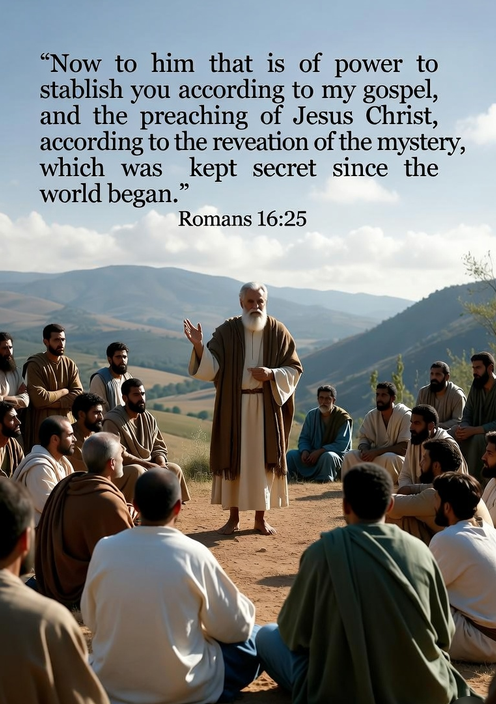
How believers are established. Romans 16:25–26 gives two requirements: believe what Paul calls “my gospel,” and understand Jesus Christ according to that mystery, not according to the earlier kingdom program. The phrase “by the scriptures of the prophets” is the method, not a third requirement. For most of Paul’s ministry the epistles did not exist yet, so God told him to make the new revelation known by using the prophets’ writings.
What the mystery actually is. It is not that God would bless Gentiles. That was already revealed (Genesis 12:3, Isaiah 11:10, Matthew 12:21). The mystery is that God now blesses Gentiles through Israel’s fall, not through Israel’s rise. In the future millennium, Reid says, a believing Israel is blessed and Gentiles are blessed through that rise. In the present dispensation of grace, Israel is blinded, and Gentiles are blessed through that fall.
Why the quotations. Paul is not saying his ministry fulfills those Old Testament verses. He uses them as principles and examples. Romans 15:4 and 1 Corinthians 10 say the earlier writings are for learning and warning. They are not being fulfilled now, but believers should still learn from them. Reid rejects the charge that this view means ignoring the Old Testament or worshiping Paul.
This Video from James Tour and Disesh D'Souza shows the Body of Christ discussing the importances of Paul's teaching and revelation.
What Christians Get Wrong About Israel and the Church
In this conversation (https://youtu.be/G4mfQNVV4I8), Dinesh D'Souza asks how the Old and New Testaments fit together, and James Tour answers as a Messianic Jew. Tour’s claim is that Israel’s covenant still stands, Jesus fulfilled that covenant, and Jews and Gentiles become one only by personally trusting him.
What D'Souza presses. He sets aside the political argument about Israel and asks the theological one: is Jesus a break with the Hebrew scriptures, or their continuation? He names replacement theology as one camp and continuity as the other. He also says the New Testament stays as Jewish as the Old, and he asks Tour what is actually settled when the Messiah returns.
What Tour argues.
• Judgment and salvation are personal. Each person stands alone before God (Romans 14:12, Ezekiel 18:20), not by ethnicity, family, or nation. No one is saved by their own goodness (Isaiah 64:6). Salvation is by grace, received by confessing Jesus as Lord and believing he rose from the dead (Ephesians 2:8–9, Romans 10:9).
• Israel is not replaced. God chose Israel as his covenant nation, and the promise of the land remains (Deuteronomy 7:6, Amos 9:14–15). Tour reads Israel’s rebirth in 1948 as that promise. He says the Jews stay in the land until Jesus returns. After seven years of tribulation, a believing remnant flees to Petra, and the Lord brings them back.
• In Christ, Jew and Gentile are one body. Gentiles were once outside Israel’s covenants. Once someone receives Jesus, that distinction ends (Galatians 3:28, Ephesians 3:3–6). Scripture then has three groups: Jews, Gentiles, and the church, made of both. The Old Testament already said God would show mercy to Gentiles. The new revelation is that Jews and Gentiles worship together as one.
• Jesus fulfilled the law and rejected later rules. Tour says Jesus kept the 613 commandments of Moses and opposed the rabbinic rules added after the Babylonian exile, such as the extra Sabbath restrictions. Reading the Gospels as Jewish books explains acts like healing with mud and spit: those broke rabbinic bans, not the law of Moses.
• Full resolution waits, but the divide can end now. At the second coming, Jesus reigns from Jerusalem for a thousand years, and it becomes plain that the Messiah Jews await and the Jesus Christians worship are the same person. Rebellion continues until the devil’s final judgment, then a new heaven and earth. Tour’s present claim is narrower: when a Jew or Gentile bows to that same Jesus, the Jew-versus-Christian conflict between them is already over, because they are one in Christ.
They are just AI summaries. Each video is much deeper. David Reid has an excellent grasp on Paul's teaching. James has that same grasp from a jewish point of view. They both see how many christians get Paul's teaching wrong in this dispensation.
- Danwillie Blogger and Believer in Christ.: At 75, I have been blogging since Al Gore invented internet. When I was 9, a lady, Mrs Slayter lead me to Christ. At that time I had little knowledge other than I was a sinner and Christ provided my a path to heaven. Every day, I thank God for Mrs Slayter.
Why Paul
- Details
- Written by: danwillie
- Category: Helps in Bible Study
- Hits: 162
Youtube video by David Reid at Columbus Bible Church https://youtu.be/udT2rv7ndRo
- Different Gospels: Galatians 2:7 distinguishes between the "gospel of the uncircumcision" (committed to Paul) and the "gospel of the circumcision" (committed to Peter) (0:34).
- Different Audiences: In Matthew 10:5-6, Jesus explicitly commands the 12 apostles not to go to the Gentiles, but to focus on the "lost sheep of the house of Israel." (5:47) Conversely, in Romans 11:13, Paul declares himself "the apostle of the Gentiles." (6:19)
- Different Relationship to the Law: Acts 21:20 notes that the early Jewish believers under Peter's ministry were "all zealous of the law." (19:10) In contrast, Paul states in Romans 6:14 that believers today are "not under the law, but under grace." (14:27)
- Danwillie Blogger and Believer in Christ.: At 75, I have been blogging since Al Gore invented internet. When I was 9, a lady, Mrs Slayter lead me to Christ. At that time I had little knowledge other than I was a sinner and Christ provided my a path to heaven. Every day, I thank God for Mrs Slayter.
Page 1 of 2
Helps for being Berean
AI Covenants Confusion
In the King James Bible (KJB), the word "covenant" appears 292 times.
It refers to a solemn, binding agreement or contract—often between God and humanity (or a specific people)—involving promises, responsibilities, conditions (or unconditional promises), signs or tokens, and frequently ratified with blood or an oath. God’s covenants demonstrate His faithfulness even when people fail.[1] (https://kingjamesbibledictionary.com/Dictionary/covenants)
The KJB uses both “covenant” (especially in the Old Testament) and “testament” (in the New Testament, translating the same underlying idea of a binding agreement or will). The books themselves are called the “Old Testament” and “New Testament,” referring to the old and new covenants.
The Major Biblical Covenants
While the exact number and grouping vary by theological perspective, a common framework (widely used in KJB study resources and dispensational teaching) identifies seven covenants. Three are made with mankind in general; four involve Israel specifically.[2] (https://www.gotquestions.org/Bible-covenants.html)
Dispensationism vs Covenant Dispensation vs Progressive Dispensation
Dispensationism vs Covenant Dispensation vs Progressive Dispensation
To me what is key is it Biblical. You be the Judge! Big words confuse me. I like progressive with covenant. Keep it Christ Centered and biblical and literal.
Covenant dispensation
Covenant dispensation (or more commonly, the "administrations" or "dispensations" of the covenant) is a concept primarily from covenant theology, a framework in Reformed and Protestant Christian thought for understanding God's relationship with humanity across redemptive history.
Key Concepts
- Covenant Theology organizes Scripture around God's covenants (formal agreements or relational bonds) rather than distinct "dispensations" as the primary structure.
- It typically identifies two main overarching covenants:
- Covenant of Works (or life): Made with Adam in Eden, promising life for perfect obedience (broken by the Fall).
- Covenant of Grace: God's promise of redemption and salvation through faith in Christ (the promised seed), established after the Fall and unfolding throughout history.
The covenant of grace is one unified covenant but administered (or "dispensed") differently in various eras. These are not separate tests or ways of salvation (salvation has always been by grace through faith), but progressive revelations and applications of the same gracious promise, pointing forward to Christ.