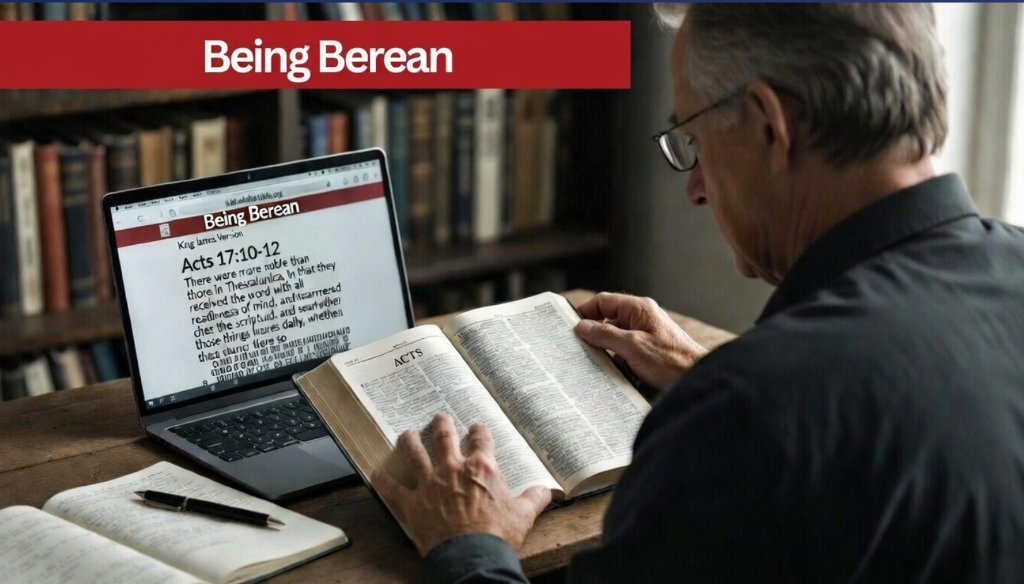
The Mystery that started the Body of Christ.
I have found 2 Youtube videos the are excellent demonstrating the importants of Understanding the mysteries Paul taught and the period they stand for.
These are the videos I found. Both demostrate the importants of Paul's Mysteries revealed to him By Jesus Christ. Below I with help of Grok summarize the two videos. One a Jew and one a Gentile reaching the same conclusion on Paul's Mysteries, Revelation and Prophesy and the Body of Christ.
- https://youtu.be/7iWQYMkoGqg CBC David Reid
Q266: Why does Paul quote the OT so much? - ttps://youtu.be/G4mfQNVV4I8 Dinesh D'Souza and Dr. James Tour "What Christians Get Wrong About Israel and the Church with Dinesh D'souza & James Tour"
Why does Paul quote the OT so much?
David expounds- is that Paul quotes the Old Testament to explain a new message, not because that message was already written there.
he puzzle. Paul says he received a mystery that had been hidden for ages, yet he quotes the Old Testament constantly. Reid argues those two facts fit together.
The mystery was not in the Old Testament. From 1 Corinthians 2:7 and Ephesians 3, Reid says the dispensation of grace was revealed to Paul by God, not through Peter or the Twelve, and was not made known in earlier ages. It was “hid in God,” so it cannot be searched out of Genesis through the Gospels. Paul’s “unsearchable riches of Christ” (Ephesians 3:8) means riches you cannot find by searching Israel’s scriptures. He contrasts that with John 5:39, where Jesus tells people the Old Testament can be searched and does point to him.
How believers are established. Romans 16:25–26 gives two requirements: believe what Paul calls “my gospel,” and understand Jesus Christ according to that mystery, not according to the earlier kingdom program. The phrase “by the scriptures of the prophets” is the method, not a third requirement. For most of Paul’s ministry the epistles did not exist yet, so God told him to make the new revelation known by using the prophets’ writings.
What the mystery actually is. It is not that God would bless Gentiles. That was already revealed (Genesis 12:3, Isaiah 11:10, Matthew 12:21). The mystery is that God now blesses Gentiles through Israel’s fall, not through Israel’s rise. In the future millennium, Reid says, a believing Israel is blessed and Gentiles are blessed through that rise. In the present dispensation of grace, Israel is blinded, and Gentiles are blessed through that fall.
Why the quotations. Paul is not saying his ministry fulfills those Old Testament verses. He uses them as principles and examples. Romans 15:4 and 1 Corinthians 10 say the earlier writings are for learning and warning. They are not being fulfilled now, but believers should still learn from them. Reid rejects the charge that this view means ignoring the Old Testament or worshiping Paul.
This Video from James Tour and Disesh D'Souza shows the Body of Christ discussing the importances of Paul's teaching and revelation.
What Christians Get Wrong About Israel and the Church
In this conversation (https://youtu.be/G4mfQNVV4I8), Dinesh D'Souza asks how the Old and New Testaments fit together, and James Tour answers as a Messianic Jew. Tour’s claim is that Israel’s covenant still stands, Jesus fulfilled that covenant, and Jews and Gentiles become one only by personally trusting him.
What D'Souza presses. He sets aside the political argument about Israel and asks the theological one: is Jesus a break with the Hebrew scriptures, or their continuation? He names replacement theology as one camp and continuity as the other. He also says the New Testament stays as Jewish as the Old, and he asks Tour what is actually settled when the Messiah returns.
What Tour argues.
• Judgment and salvation are personal. Each person stands alone before God (Romans 14:12, Ezekiel 18:20), not by ethnicity, family, or nation. No one is saved by their own goodness (Isaiah 64:6). Salvation is by grace, received by confessing Jesus as Lord and believing he rose from the dead (Ephesians 2:8–9, Romans 10:9).
• Israel is not replaced. God chose Israel as his covenant nation, and the promise of the land remains (Deuteronomy 7:6, Amos 9:14–15). Tour reads Israel’s rebirth in 1948 as that promise. He says the Jews stay in the land until Jesus returns. After seven years of tribulation, a believing remnant flees to Petra, and the Lord brings them back.
• In Christ, Jew and Gentile are one body. Gentiles were once outside Israel’s covenants. Once someone receives Jesus, that distinction ends (Galatians 3:28, Ephesians 3:3–6). Scripture then has three groups: Jews, Gentiles, and the church, made of both. The Old Testament already said God would show mercy to Gentiles. The new revelation is that Jews and Gentiles worship together as one.
• Jesus fulfilled the law and rejected later rules. Tour says Jesus kept the 613 commandments of Moses and opposed the rabbinic rules added after the Babylonian exile, such as the extra Sabbath restrictions. Reading the Gospels as Jewish books explains acts like healing with mud and spit: those broke rabbinic bans, not the law of Moses.
• Full resolution waits, but the divide can end now. At the second coming, Jesus reigns from Jerusalem for a thousand years, and it becomes plain that the Messiah Jews await and the Jesus Christians worship are the same person. Rebellion continues until the devil’s final judgment, then a new heaven and earth. Tour’s present claim is narrower: when a Jew or Gentile bows to that same Jesus, the Jew-versus-Christian conflict between them is already over, because they are one in Christ.
They are just AI summaries. Each video is much deeper. David Reid has an excellent grasp on Paul's teaching. James has that same grasp from a jewish point of view. They both see how many christians get Paul's teaching wrong in this dispensation.