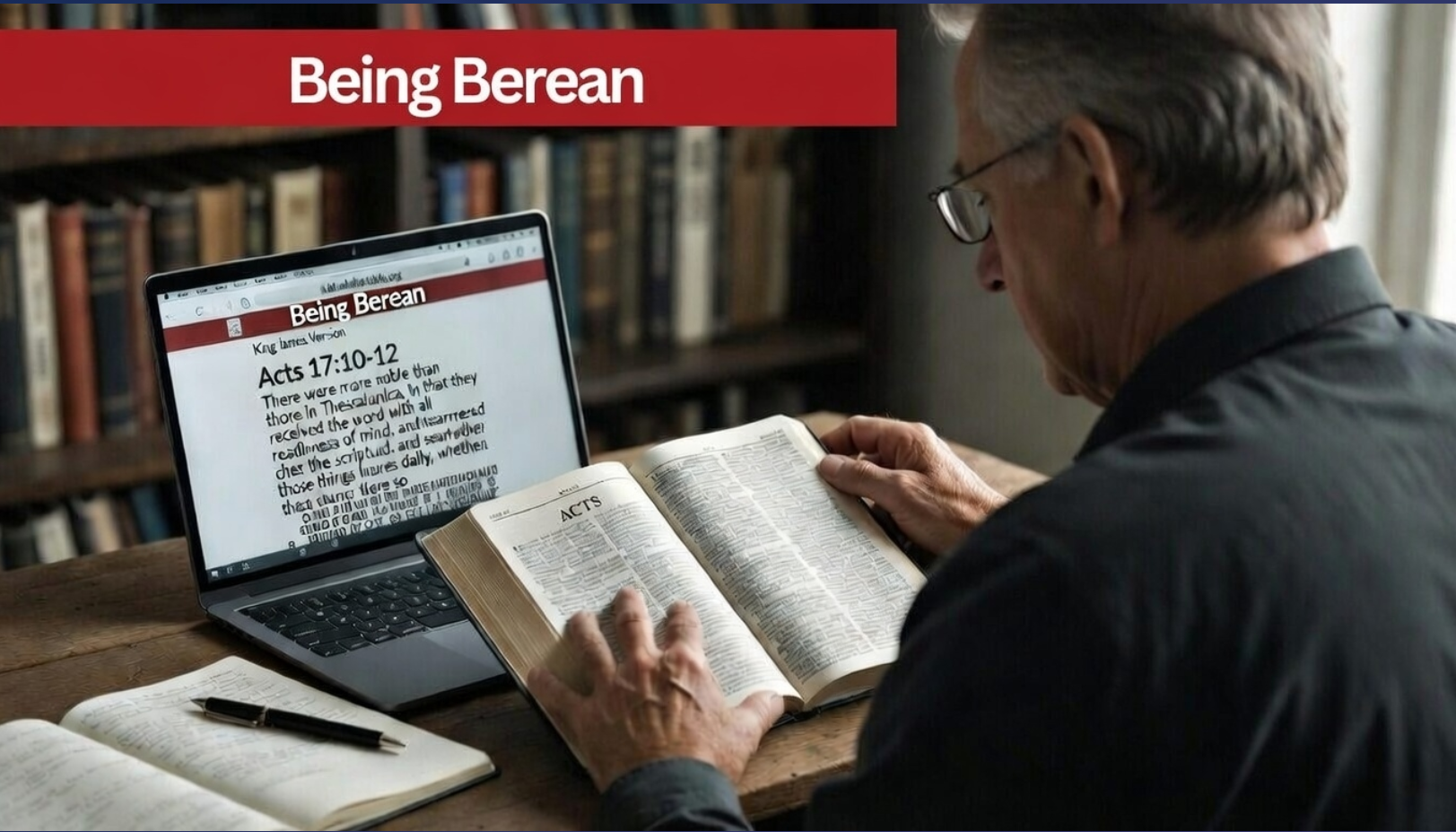
Similarities Between Being Berean and Rightly Dividing
Both Acts 17:10-12 (the Bereans) and 2 Timothy 2:15 (Rightly Dividing) describe the same core Christian practice: a diligent, Scripture-centered approach to truth. They complement each other beautifully.
The Two Passages (KJV)
Acts 17:11 “These were more noble than those in Thessalonica, in that they received the word with all readiness of mind, and searched the scriptures daily, whether those things were so.”
2 Timothy 2:15 “Study to shew thyself approved unto God, a workman that needeth not to be ashamed, rightly dividing the word of truth.”
Key Similarities
| Similarity | Being Berean (Acts 17) | Rightly Dividing (2 Tim 2:15) | Shared Principle |
|---|---|---|---|
| Active Engagement with Scripture | Searched the Scriptures daily | Study to show thyself approved | Scripture is not passively heard — it must be actively examined and handled. |
| Testing Teaching Against the Bible | Checked if Paul’s message lined up with OT Scriptures | Handle the word accurately / straight | The Bible is the final authority. Human teaching (even apostolic) is tested by it. |
| Attitude of Readiness & Diligence | “Readiness of mind” + daily effort | Diligent “workman” who wants God’s approval | Both require eagerness + hard work, not laziness or blind acceptance. |
| Goal: Truth & Approval | Many believed because they verified truth | Workman “needeth not to be ashamed” | Leads to genuine faith and unashamed confidence before God. |
| Response to Apostolic Teaching | Tested Paul & Silas’s preaching | Timothy (Paul’s protégé) must rightly handle Paul’s instructions | Even the best teachers’ words are submitted to Scripture. |
| Protection Against Error | Contrasted with hostile Thessalonians | Written in context of false teachers & word-striving | Guards against deception and doctrinal confusion. |
| Noble / Approved Character | Called “more noble” | “Approved unto God” | Produces maturity and honor before God and people. |
How They Work Together
- The Berean spirit supplies the attitude (eager, open, humble, daily).
- Rightly dividing supplies the skill (accurate, straight, contextual handling of the Word).
Together they form a powerful method of Bible study:
- Receive teaching eagerly.
- Examine it carefully against the whole of Scripture.
- Handle the Word accurately so you can believe, obey, and teach it without shame.
This is exactly what Paul practiced and commended. In Thessalonica he preached Christ from the Old Testament; the Bereans checked his work. Later, Paul told Timothy to study the same way.
Application in Our Earlier Conversation
Whether you lean toward Covenant Theology, Dispensationalism, or Progressive Dispensationalism, both practices call you to:
- Test every system by the Scriptures themselves.
- Avoid forcing Scripture into a system (or ignoring distinctions Paul made).
- Recognize progressive revelation while keeping Christ central.
- “Search daily” to see if teachings about Israel/Church, law/grace, or kingdom timing are truly “so.”
Bottom line: The noble Berean and the approved workman are two sides of the same coin — a Christian who loves truth enough to dig into the Bible every day and handle it straight. This is the heart of faithful Bible study.