"Why you can't loose your Salvation "
It's a Gift from God, its not your's to loose.
In this period of Grace, it's a Gift form God for your belief in 1 Corinthians 15: 1-4.
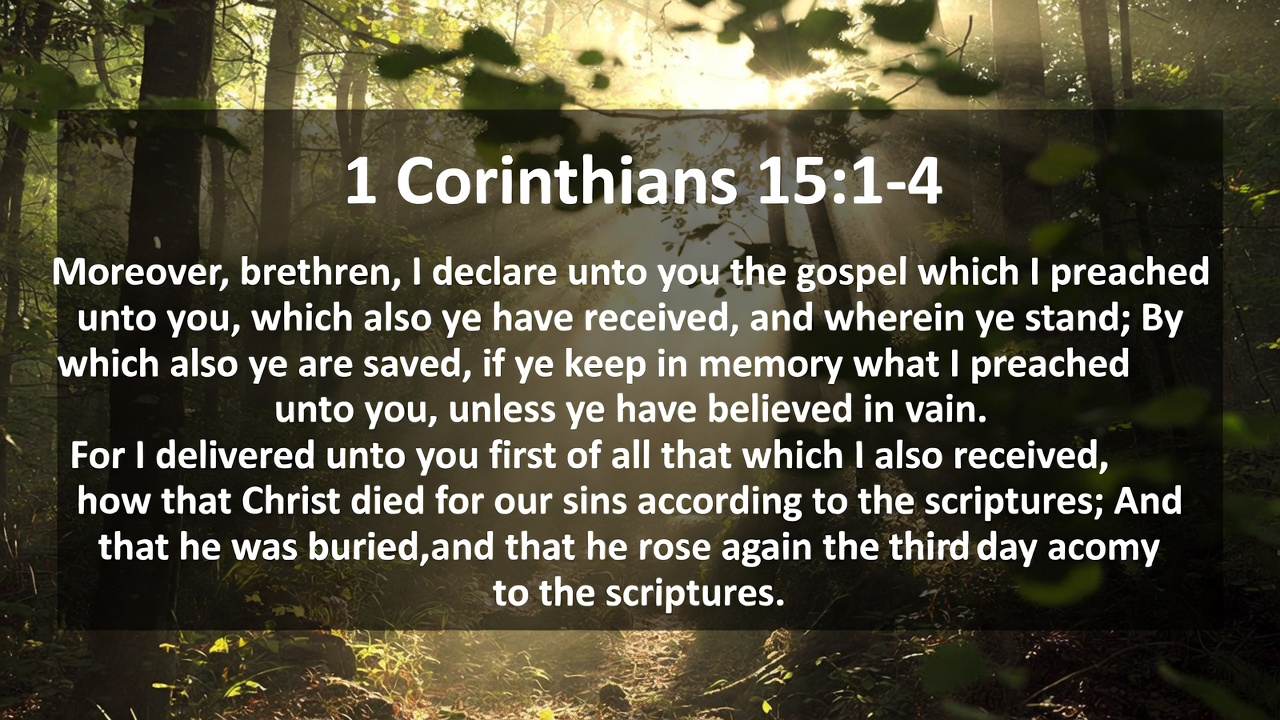
[1Co 15:1-58 KJV] 1 Moreover, brethren, I declare unto you the gospel which I preached unto you, which also ye have received, and wherein ye stand; 2 By which also ye are saved, if ye keep in memory what I preached unto you, unless ye have believed in vain. 3 For I delivered unto you first of all that which I also received, how that Christ died for our sins according to the scriptures; 4 And that he was buried, and that he rose again the third day according to the scriptures:
Here's a clear outline and summary of the YouTube video "Why Salvation Can't Be Lost" by Grace Ambassadors (Bible Fellowship teaching, July 6, 2025).
Overall Summary
This teaching presents a strong defense of eternal security (or "once saved, always saved") for believers in the current dispensation of grace. The core argument is that salvation is a finished work of Jesus Christ, received by grace through faith alone (not works), and cannot be lost because it depends entirely on what God has done, not on human effort or behavior.
The speaker addresses common debates, clarifies misconceptions (e.g., confusing salvation with rewards, service, or conditional promises from other dispensations), and uses right division (Mid-Acts Pauline dispensationalism) to explain why certain "warning" verses do not apply to the Body of Christ today. Salvation is portrayed as secure because believers are reconciled, regenerated, justified, sealed, and baptized into Christ—none of which can be undone by sin or failure.
Key emphasis: Grace abounds more than sin (Romans 5:20), and the gospel of grace (1 Corinthians 15:1-4) saves completely without requiring ongoing maintenance.
Key Points and Supporting Verses
1. Introduction: The Debate and Importance of Right Division
- Many Christians debate whether salvation can be lost; the Bible is used on both sides.
- Proper understanding requires rightly dividing the Scriptures (especially distinguishing prophecy/Israel from the mystery/grace for the Body of Christ).
- Salvation today is not the same as in other dispensations (e.g., not conditional on law-keeping or endurance to the end).
2. Salvation Is a Gift, Not Earned or Maintained by Works
- Ephesians 2:8-9 — "For by grace are ye saved through faith; and that not of yourselves: it is the gift of God: Not of works, lest any man should boast."
- Romans 4:5 — Justification is to "him that worketh not, but believeth on him that justifieth the ungodly."
- If salvation could be lost by sin or lack of works, it would no longer be by grace but by performance.
3. The Finished Work of Christ
- Salvation is complete at the moment of belief in the gospel (Christ's death, burial, and resurrection — 1 Corinthians 15:1-4).
- Key aspects that cannot be reversed:
- Reconciliation to God (Romans 5:10-11).
- Regeneration (new birth, new creature — 2 Corinthians 5:17).
- Justification (declared righteous — Romans 5:1, Romans 8:30-33).
- Indwelling and sealing of the Holy Spirit (Ephesians 1:13-14, 4:30 — "sealed unto the day of redemption").
- Romans 8:38-39 — Nothing (sin, death, angels, principalities, etc.) can separate us from the love of God in Christ.
- The work is already done; believers are "accepted in the beloved" (Ephesians 1:6).
4. Grace Abounds Over Sin
- Romans 5:20 — "But where sin abounded, grace did much more abound."
- Romans 6-7 discuss ongoing sin in the believer's life, yet Romans 8 affirms no condemnation (Romans 8:1).
- Believers still sin (Romans 7:15-25), but sin does not undo salvation because Christ paid the full penalty.
5. Addressing Verses That Seem to Suggest Loss of Salvation
- The teaching examines common "loss of salvation" proof texts and shows they either:
- Apply to a different dispensation (e.g., Israel under law or tribulation).
- Refer to loss of rewards, fellowship, or physical life—not eternal salvation.
- Or describe false professors who were never truly saved.
- Examples often include passages from Galatians, Hebrews, or the Gospels, but they are rightly divided as not applying to the mystery program of grace today.
- Galatians 5:4 ("fallen from grace") is addressed as losing the standing of grace by going back to law, not losing eternal life.
6. Practical Implications and Conclusion
- True security comes from trusting Christ's finished work, not personal performance or feelings.
- This doctrine motivates holy living out of gratitude, not fear of losing salvation.
- Believers are eternally secure, baptized by one Spirit into one Body (1 Corinthians 12:13), and destined for glory.
- Final encouragement: Trust the gospel that saves today—the work is already accomplished.