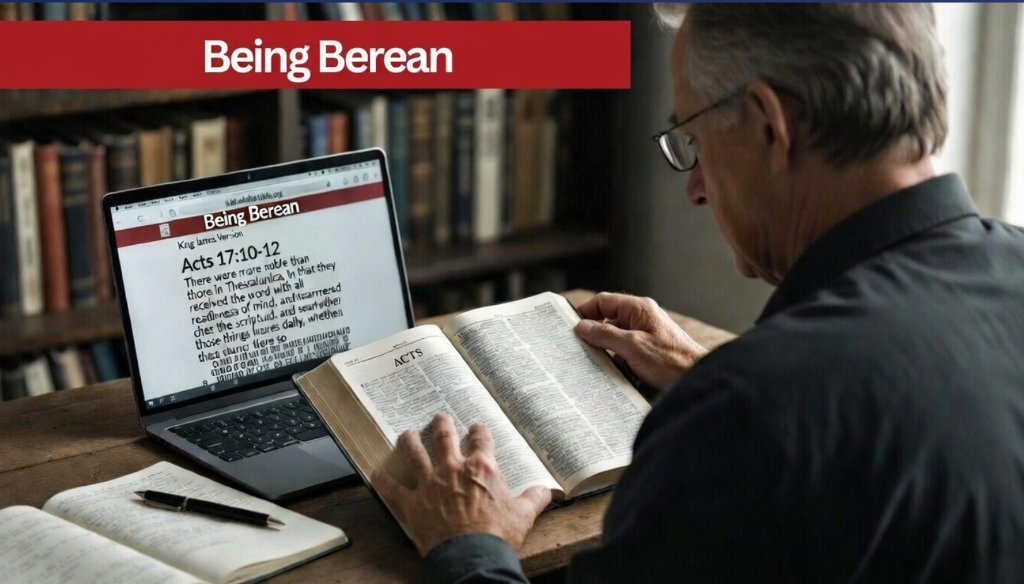
Be a Berean

The Purpose of this site is only to get you to open your Bible and read it. Don't be surprised at new revelations such as Paul's Mysteries. Be a Berean means studing and understanding God's Word and where Old Testament Prophecy was fulfilled.

Summary of Key Themes in Romans

 
The Epistle to the Romans is Paul’s longest and most systematic letter. It is often considered his theological masterpiece, laying out the gospel in a logical, comprehensive way. Written around AD 57 to a mixed Jewish-Gentile church in Rome that Paul had not yet visited, it explains how God makes sinners right with Himself and what that means for daily life.Major Themes (in the order they unfold in the letter)
  1. Universal Sin and Guilt (Chapters 1–3)
    • All humanity—Gentiles and Jews alike—is under sin and God’s judgment.
    • No one is righteous by their own efforts; the Law exposes sin but cannot remove it.
    • “All have sinned and fall short of the glory of God” (3:23).
  2. Justification by Faith Alone (Chapters 3–5)
    • Central theme of the letter.
    • Righteousness comes as a free gift through faith in Jesus Christ’s atoning death, not by works of the Law.
    • Abraham is the prime example: justified by faith before the Law or circumcision.
    • Peace with God, access to grace, and hope of glory result from this justification.
    • from Sin and the Law (Chapters 6–7) 
      • Believers have died with Christ and are no longer slaves to sin.
      • The Law is holy but powerless to produce righteousness; it reveals sin and stirs it up.
      • The internal struggle (“wretched man” in 7:24) highlights the need for deliverance.
  3. Life in the Spirit (Chapter 8)
    • The solution to the struggle: living by the Holy Spirit.
    • No condemnation for those in Christ Jesus.
    • Adoption as God’s children, future glory, and the assurance that nothing can separate us from God’s love.
    • The Spirit helps us in weakness and intercedes for us.
  4. God’s Sovereignty and Election (Chapters 9–11)
    • God’s right to choose (election) and His faithfulness to Israel.
    • Israel’s current rejection of the Messiah is part of God’s plan to include the Gentiles.
    • A remnant of Israel is saved by grace; ultimately “all Israel will be saved.”
    • Doxology of praise for God’s unsearchable wisdom (11:33–36).
  5. Practical Christian Living (Chapters 12–15)
    • Present your bodies as living sacrifices; be transformed by renewing your mind.
    • Use of spiritual gifts, genuine love, submission to authorities, and living at peace.
    • Strong and weak believers must accept one another without judging (especially over food and holy days).
    • Christ-like humility and unity in the church.
  6. Mission and Personal Plans (Chapter 15–16)
    • Paul’s ambition to preach the gospel where Christ is not known.
    • His plan to visit Rome on the way to Spain.
    • Extensive personal greetings showing the gospel’s relational impact.
One-Sentence SummaryRomans explains the gospel: God’s righteousness is revealed from faith to faith—humanity is justly condemned, but justified freely by grace through faith in Christ, empowered by the Spirit to live holy lives, while God’s sovereign plan embraces both Jew and Gentile.**Romans is dense and rich; many Christians study it repeatedly because it profoundly shapes Christian doctrine on salvation, grace, faith, and sanctification. If you’d like a chapter-by-chapter breakdown, key verses, or how a specific theme connects to other epistles, let me know!
  • Danwillie Blogger and Believer in Christ.: At 75, I have been blogging since Al Gore invented internet. When I was 9, a lady, Mrs Slayter lead me to Christ. At that time I had little knowledge other than I was a sinner and Christ provided my a path to heaven. Every day, I thank God for Mrs Slayter.

Helps for being Berean

AI Covenants Confusion

In the King James Bible (KJB), the word "covenant" appears 292 times.


 It refers to a solemn, binding agreement or contract—often between God and humanity (or a specific people)—involving promises, responsibilities, conditions (or unconditional promises), signs or tokens, and frequently ratified with blood or an oath. God’s covenants demonstrate His faithfulness even when people fail.[1] (https://kingjamesbibledictionary.com/Dictionary/covenants)

The KJB uses both “covenant” (especially in the Old Testament) and “testament” (in the New Testament, translating the same underlying idea of a binding agreement or will). The books themselves are called the “Old Testament” and “New Testament,” referring to the old and new covenants.

The Major Biblical Covenants
While the exact number and grouping vary by theological perspective, a common framework (widely used in KJB study resources and dispensational teaching) identifies seven covenants. Three are made with mankind in general; four involve Israel specifically.[2] (https://www.gotquestions.org/Bible-covenants.html)

Dispensationism vs Covenant Dispensation vs Progressive Dispensation

Dispensationism vs Covenant Dispensation vs Progressive Dispensation

To me what is key is it Biblical. You be the Judge! Big words confuse me. I like progressive with covenant. Keep it Christ Centered and biblical and literal. 

Covenant dispensation

Covenant dispensation (or more commonly, the "administrations" or "dispensations" of the covenant) is a concept primarily from covenant theology, a framework in Reformed and Protestant Christian thought for understanding God's relationship with humanity across redemptive history.

Key Concepts

  • Covenant Theology organizes Scripture around God's covenants (formal agreements or relational bonds) rather than distinct "dispensations" as the primary structure.
  • It typically identifies two main overarching covenants:
    • Covenant of Works (or life): Made with Adam in Eden, promising life for perfect obedience (broken by the Fall).
    • Covenant of Grace: God's promise of redemption and salvation through faith in Christ (the promised seed), established after the Fall and unfolding throughout history.

The covenant of grace is one unified covenant but administered (or "dispensed") differently in various eras. These are not separate tests or ways of salvation (salvation has always been by grace through faith), but progressive revelations and applications of the same gracious promise, pointing forward to Christ.