Be a Berean

The Purpose of this site is only to get you to open your Bible and read it. Don't be surprised at new revelations such as Paul's Mysteries. Be a Berean means studing and understanding God's Word and where Old Testament Prophecy was fulfilled.
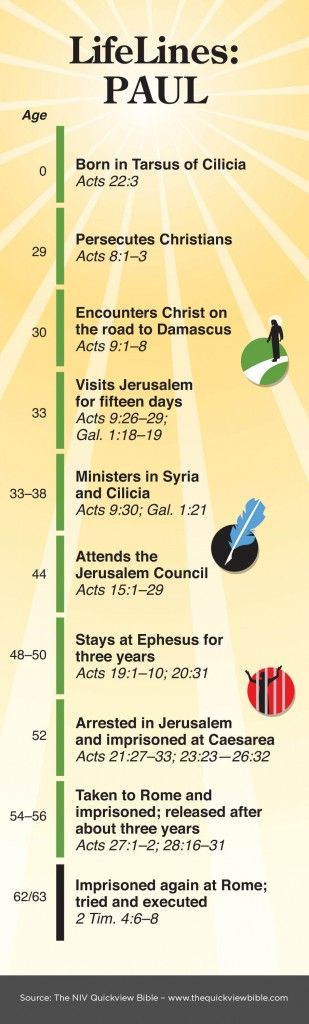
Paul, the apostle timeline

Youtube video by David Reid at Columbus Bible Church  https://youtu.be/udT2rv7ndRo

Why Paul? | Rightly Dividing with David Reid
wrong video link https://youtu.be/udT2rv7ndRo
 
AI from Google! Remember, be a good berean and Using KJB see if this correct. With AI always verify!
The correct video, titled "Why Paul? | Rightly Dividing with David Reid," focuses on understanding the specific purpose and uniqueness of the Apostle Paul's ministry. Rather than focusing on why Paul preferred a specific translation like the King James Bible, the sermon uses KJB verses to establish why God called Paul and how his ministry differs from the other apostles (0:00).
The speaker breaks this down into two central points using King James Bible verses:
1. Paul Has a Different Apostleship and Gospel
The video outlines that mainstream Christianity often assumes Paul taught the exact same message as Peter and the 12 apostles (0:19). Using several comparative verses, the speaker argues they actually had distinct missions (5:09):
  • Different Gospels: Galatians 2:7 distinguishes between the "gospel of the uncircumcision" (committed to Paul) and the "gospel of the circumcision" (committed to Peter) (0:34).
  • Different Audiences: In Matthew 10:5-6, Jesus explicitly commands the 12 apostles not to go to the Gentiles, but to focus on the "lost sheep of the house of Israel." (5:47) Conversely, in Romans 11:13, Paul declares himself "the apostle of the Gentiles." (6:19)
  • Different Relationship to the Law: Acts 21:20 notes that the early Jewish believers under Peter's ministry were "all zealous of the law." (19:10) In contrast, Paul states in Romans 6:14 that believers today are "not under the law, but under grace." (14:27)
2. Paul Was Given New, Secret Information ("The Mystery")
The second half of the video centers on Ephesians 3 to prove that Paul's revelation was entirely new, rather than a continuation of Old Testament prophecy (22:14).
  • Unsearchable Riches: Ephesians 3:8 refers to the "unsearchable riches of Christ." (41:10) The speaker explains that "unsearchable" means it was impossible to find or look up in the Old Testament scriptures (44:29), contrasting this with Jesus telling people to "search the scriptures" in John 5:39 to verify His earthly identity (42:01).
  • Hidden in God: Ephesians 3:9 states that this "mystery" was hidden in God from the beginning of the world (45:48).
  • Outsmarting Satan: The speaker references 1 Corinthians 2:7-8, noting that God deliberately kept this wisdom secret (52:31). If the "princes of this world" (Satan and his powers) had known God's hidden plan to form the Body of Christ and reconcile the heavens, they would never have crucified Jesus (51:14).
Summary Conclusion: Ultimately, the video argues "Why Paul?" matters because he was uniquely chosen to reveal a secret heavenly program—the Body of Christ—bringing Jews and Gentiles together under pure grace, separate from Israel's prophetic earthly kingdom program (57:53).


Description of Columbus Bible Church and Pastor David Reid

We are a Bible-believing church in central Ohio that proclaims salvation by grace through faith alone in the death, burial, and resurrection of the Lord Jesus Christ for the forgiveness of sins. Our literal, dispensational approach to Scripture provides a distinctive, stable, God-given framework for understanding the Bible, strengthening faith, and helping believers grow in Christ (1 Cor. 15:3–4; Eph. 2:8–9; Rom. 11:6; Rom. 16:25; Eph. 3; 2 Tim. 2:15). We invite you to join us in person on Sunday mornings and Wednesday evenings, or study with us online through our website, Facebook page, or YouTube channel. Explore our website or contact us to learn more. It would be our joy to welcome you and help you know with confidence that you have eternal life. Grow with us in the knowledge of God’s word and the riches of His grace! For more information, please visit our website: www.ColumbusBibleChurch.com.

More info

Youtube video by David Reid at Columbus Bible Church  https://youtu.be/udT2rv7ndRo AI from Google! Remember, be a good berean and Using KJB see if this correct. With AI always verify!

  • Danwillie Blogger and Believer in Christ.: At 75, I have been blogging since Al Gore invented internet. When I was 9, a lady, Mrs Slayter lead me to Christ. At that time I had little knowledge other than I was a sinner and Christ provided my a path to heaven. Every day, I thank God for Mrs Slayter.

Helps for being Berean

AI Covenants Confusion

In the King James Bible (KJB), the word "covenant" appears 292 times.


 It refers to a solemn, binding agreement or contract—often between God and humanity (or a specific people)—involving promises, responsibilities, conditions (or unconditional promises), signs or tokens, and frequently ratified with blood or an oath. God’s covenants demonstrate His faithfulness even when people fail.[1] (https://kingjamesbibledictionary.com/Dictionary/covenants)

The KJB uses both “covenant” (especially in the Old Testament) and “testament” (in the New Testament, translating the same underlying idea of a binding agreement or will). The books themselves are called the “Old Testament” and “New Testament,” referring to the old and new covenants.

The Major Biblical Covenants
While the exact number and grouping vary by theological perspective, a common framework (widely used in KJB study resources and dispensational teaching) identifies seven covenants. Three are made with mankind in general; four involve Israel specifically.[2] (https://www.gotquestions.org/Bible-covenants.html)

Dispensationism vs Covenant Dispensation vs Progressive Dispensation

Dispensationism vs Covenant Dispensation vs Progressive Dispensation

To me what is key is it Biblical. You be the Judge! Big words confuse me. I like progressive with covenant. Keep it Christ Centered and biblical and literal. 

Covenant dispensation

Covenant dispensation (or more commonly, the "administrations" or "dispensations" of the covenant) is a concept primarily from covenant theology, a framework in Reformed and Protestant Christian thought for understanding God's relationship with humanity across redemptive history.

Key Concepts

  • Covenant Theology organizes Scripture around God's covenants (formal agreements or relational bonds) rather than distinct "dispensations" as the primary structure.
  • It typically identifies two main overarching covenants:
    • Covenant of Works (or life): Made with Adam in Eden, promising life for perfect obedience (broken by the Fall).
    • Covenant of Grace: God's promise of redemption and salvation through faith in Christ (the promised seed), established after the Fall and unfolding throughout history.

The covenant of grace is one unified covenant but administered (or "dispensed") differently in various eras. These are not separate tests or ways of salvation (salvation has always been by grace through faith), but progressive revelations and applications of the same gracious promise, pointing forward to Christ.